A borderline sugar report often comes with the same advice: "watch your diet". But what should you actually eat on a Monday morning, or for Thursday dinner? This 7-day Indian meal plan for prediabetes turns that advice into ordinary home food, with no special ingredients and no crash dieting.
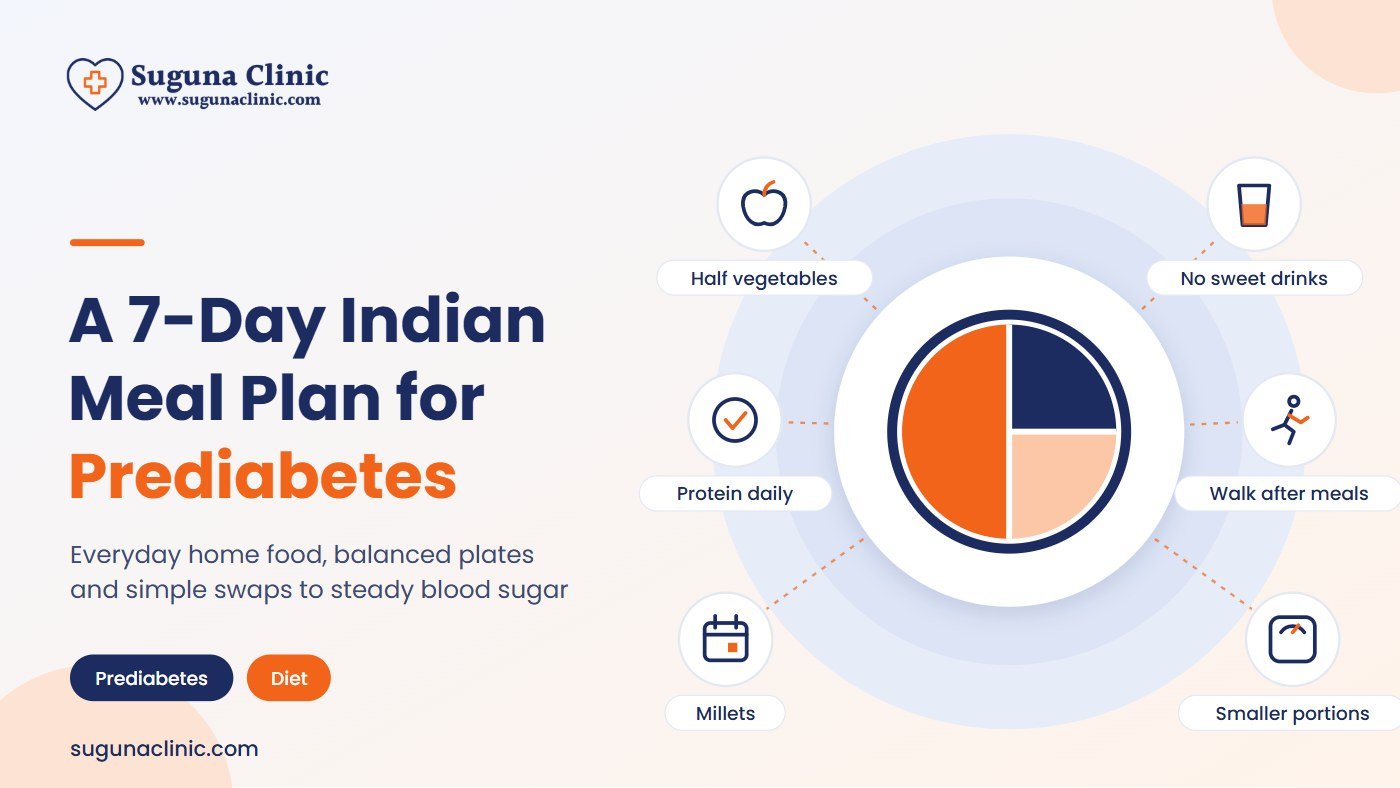
The idea in one line: keep your usual foods, but change the proportions. Half the plate vegetables, a quarter protein, a quarter grains, and far fewer sugary drinks. If you want to understand the test ranges first, read our full guide to prediabetes in India.
Five rules that make any day work
- Protein at every meal. Dal, chana, rajma, curd, paneer, eggs, fish or chicken help you feel full and slow the rise in sugar after eating.
- Vegetables first. Start the meal with the sabzi, salad or sambar vegetables, then move to rice or roti.
- Swap part of the grain, not all of it. Mix millets such as jowar, ragi or foxtail millet with rice or wheat. Keep the portion to roughly one cup of cooked rice or two medium rotis per meal.
- Drink water, buttermilk or unsweetened tea. Fruit juices, soft drinks and "health" drinks are the fastest source of hidden sugar.
- Move after meals. A 10–15 minute walk after lunch or dinner is part of the plan, not an extra.
The 7-day plan
Portions are for an average adult. Adjust them to your appetite, activity and your doctor's advice. Vegetarian options are listed first; swap in eggs, fish or chicken if you eat them.
| Day | Breakfast | Lunch | Dinner |
|---|---|---|---|
| Mon | 2 moong dal pesarattu with coconut-coriander chutney | 1 cup rice, dal, beans poriyal, cucumber salad, curd | 2 jowar rotis, palak paneer, onion-tomato salad |
| Tue | Vegetable oats upma with a handful of peanuts | 2 rotis, rajma, cabbage sabzi, buttermilk | Ragi dosa, sambar with plenty of vegetables |
| Wed | 2 idlis, a bowl of sambar, 1 boiled egg or a small bowl of sprouts | Half rice, half foxtail millet with dal, bhindi fry, salad | Vegetable khichdi (more dal than rice), curd, stir-fried greens |
| Thu | Besan chilla with grated vegetables, mint chutney | 1 cup rice, fish curry or chana masala, carrot-beetroot salad | 2 multigrain rotis, mixed vegetable kurma, dal |
| Fri | Vegetable poha with peanuts and a bowl of curd | 2 rotis, chole, lauki sabzi, buttermilk | Egg bhurji or paneer bhurji, 1 roti, large salad |
| Sat | 2 millet idlis, tomato chutney, sprouts salad | Small portion of biryani with raita and a big plate of salad | Clear vegetable soup, 2 jowar rotis, methi dal |
| Sun | Paneer or egg sandwich on whole-wheat bread with vegetables | 1 cup rice, chicken curry or dal tadka, cabbage-peas sabzi | Vegetable daliya (broken wheat) with curd |
Snacks between meals
If you get hungry between meals, choose one small snack rather than biscuits or namkeen:
- A handful of roasted chana or peanuts
- One whole fruit such as a guava, orange, apple or pear (rather than juice)
- A bowl of sprouts chaat with lemon and onion
- A glass of buttermilk or a small bowl of curd
- Cucumber or carrot sticks with hummus
Tea, coffee and sweets
Many people drink three or four cups of sweet tea a day without counting it. Reduce the sugar gradually, by about half a spoon each week, until you are comfortable with little or none. Limit tea or coffee to one or two cups. For festivals and family events, have a small portion of the sweet you enjoy most, after a proper meal rather than on an empty stomach, and add an extra walk that day.
What about fruit, rice and ghee?
- Fruit: whole fruit is fine in sensible portions. Very sweet fruits such as ripe mango, chikoo and grapes are better as a small treat than a daily habit.
- Rice: you do not have to give it up. Portion size and what you eat alongside it matter more. Pair it with dal, vegetables and curd.
- Ghee and oil: use them in measured amounts. Fat does not raise sugar directly, but extra calories make weight and waist control harder.
What a balanced plate looks like
Use an ordinary 9-inch dinner plate as your guide. You don't need a weighing scale; the plate does the measuring for you.
| Part of the plate | What goes there | Easy examples |
|---|---|---|
| Half | Non-starchy vegetables | Beans, cabbage, bhindi, lauki, palak, carrot, cucumber, tomato salad |
| A quarter | Protein | Dal, chana, rajma, paneer, curd, eggs, fish, chicken |
| A quarter | Grains or starch | Rice, roti, millet roti, idli, dosa, potato |
| On the side | Something fermented or cooling | A small bowl of curd, raita or a glass of buttermilk |
Potato, corn and peas count as starch, so if the sabzi is aloo-based, have a smaller portion of rice or roti with it.
Office lunches and eating out
- Tiffin at work: pack the sabzi in the larger container and the rice or rotis in the smaller one. It sounds trivial, but it quietly reverses the usual proportions.
- Canteen thali: take the dal and vegetables in full, leave some of the rice, and skip the sweet or share it.
- Restaurants: order a salad or soup first, choose tandoori or grilled dishes over fried or cream-based gravies, and ask for one roti or naan at a time instead of a basket.
- South Indian breakfast outlets: a plain dosa or two idlis with sambar is a better choice than a masala dosa with potato filling and extra chutney.
- Drinks: order fresh lime soda without sugar, buttermilk or plain water instead of juices and soft drinks.
A simple weekly shopping list
Having the right basics at home makes the plan easy to follow on busy days:
- Pulses: moong dal, toor dal, chana, rajma, sprouts
- Grains: jowar or ragi flour, foxtail millet, whole-wheat atta, rolled oats, broken wheat (daliya)
- Protein: curd, paneer, eggs; fish or chicken if you eat them
- Vegetables: at least five kinds for the week, including one leafy green
- Fruit: guava, oranges, apples or pears, bought in quantities you'll actually eat
- Snacks: roasted chana, unsalted peanuts, a small pack of mixed nuts
- Leave on the shelf: packaged juices, biscuits, sweetened cereals and bakery snacks
Make it stick
Nobody follows a meal plan perfectly. What changes blood sugar over months is repeating a few habits most days: balanced plates, fewer sugary drinks, a walk after meals and enough sleep. Pick two changes this week, add two more next week, and ask for a repeat test after three to six months to see your progress.
Check with your doctor first if you already take medicines for diabetes, have kidney disease, are pregnant, or have been advised a special diet. Portions and food choices may need to be adjusted for you.
Want to know where your numbers stand and who should be tested? Read the full guide: Prediabetes in India: blood sugar range, signs and how to reverse it. For more meal ideas, see the diabetes diet guide for Indians, and for a steady, realistic approach to weight, the sustainable weight loss plan.
General health information only, not a diagnosis. This meal plan is a general example, not a personal prescription. Please consult a qualified doctor or dietitian about your own needs.
Comments
Post a Comment